

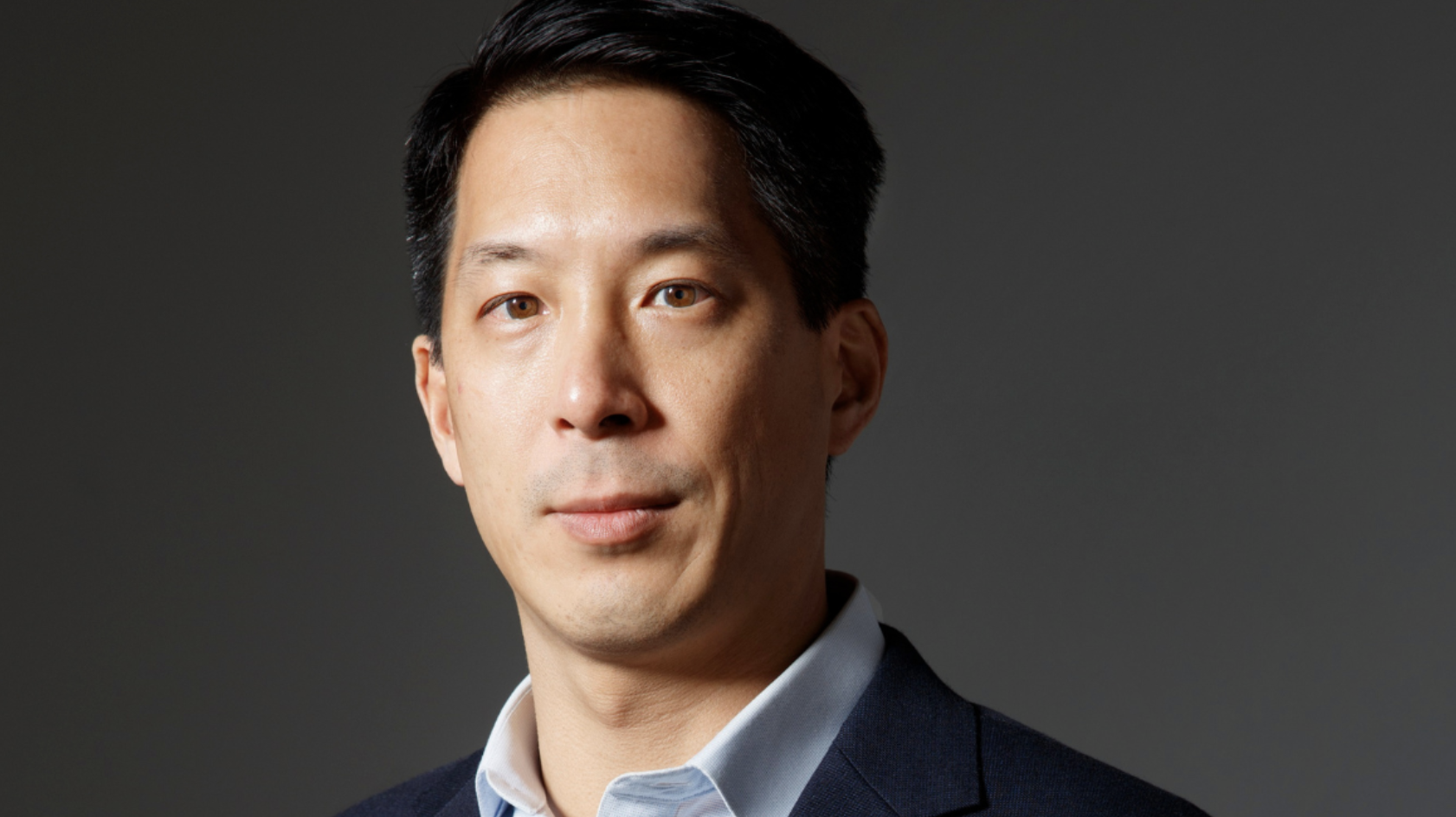
Every single person should study the history of Chinese experiences in the United States. Michael Luo’s Strangers in the Land is an excellent starting point for that worthy project. As the U.S. government today targets immigrants for mass deportation and specifically sets its sights on Chinese and Chinese American residents as potential foreign agents, a look at the historical record shows that these events are part of a larger pattern of racist abuses.
The endurance of racism depends in part on the official falsification of history. This distortion of reality underlies the Trump administration’s current attempt to redefine the Fourteenth Amendment’s “birthright citizenship” provision. Michael Luo’s close study of historical documents, including immigration enforcement records, shows that after the Fourteenth Amendment’s passage, Chinese-descended people born on U.S. soil were recognized as citizens. Even among the most virulent anti-Chinese government officials, the notion that the Fourteenth Amendment was meant to apply only to people of African descent was not widely held. As the majority opinion in the 1898 case United States v. Wong Kim Ark observed, if the “birthright citizenship” provision applied only to people of African descent, the recently arrived Euro-American proponents of that notion would have jeopardized their own children’s citizenship. (Notably, the origin of the Wong Kim Ark case was less about whether American-born Chinese people were citizens and more about Wong’s proof that he had been born here.)
Strangers in the Land explores, documents, and narrates the contradictions in the racist policies that underlay hostility toward Chinese migrants, the immigration policies that developed over the course of the nineteenth century, and the violence with which Euro-Americans — both officially and through lynch mobs — systematically imposed those policies on them. The bulk of the book examines archives of immigration records, media accounts, political debates, and business records to reconstruct the experiences of Chinese and Chinese American people from the first arrivals in the 1840s through the 1960s. A handful of primary Chinese-authored documents also support the overall project.
The golden welcome and the racial backlash (1848–1860s)
In 1848, immediately after the U.S. government defeated Mexico and expropriated its northern territories in a war meant to extend the life of the slave system, Americans in California urged and welcomed Chinese migration to a sparsely populated territory desperate for capitalist development. Like so many new arrivals to the West Coast, Chinese migrants — who came mostly from a relatively small area in the Cantonese-speaking province of Guangdong in Southern China — arrived to mine gold. California officials saw them as a resource for population growth, economic development, and securing the U.S. claim to a contested region. Immediately, Euro-American miners saw them through a racial lens, as a collectively defined source of supposedly unfair competition. White Californians demanded that political leaders impose restrictions on their access to mines, including a “Foreign Miners’ Tax” (applied to Mexicans as well) meant to discourage their participation in that industry. That tax, which steadily increased over the two decades or so when precious mining was lucrative for small-scale operations, financed major infrastructural improvements in the state as well as its education system, from which Chinese-born people were barred.
The construction of “cheap labor” and the workingmen’s betrayal
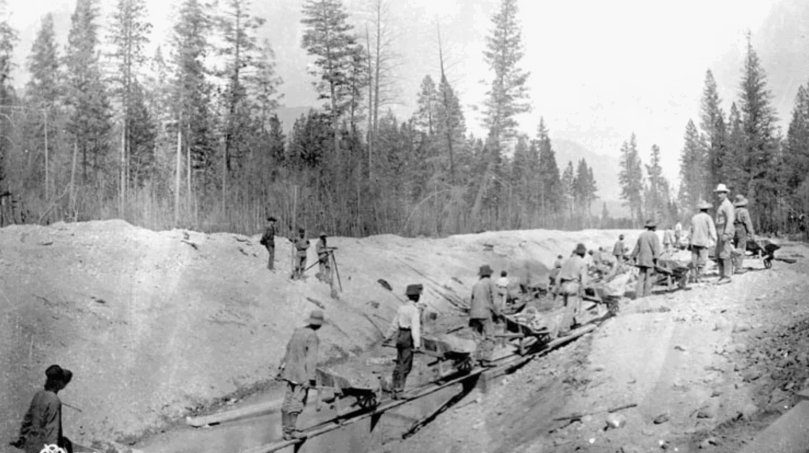
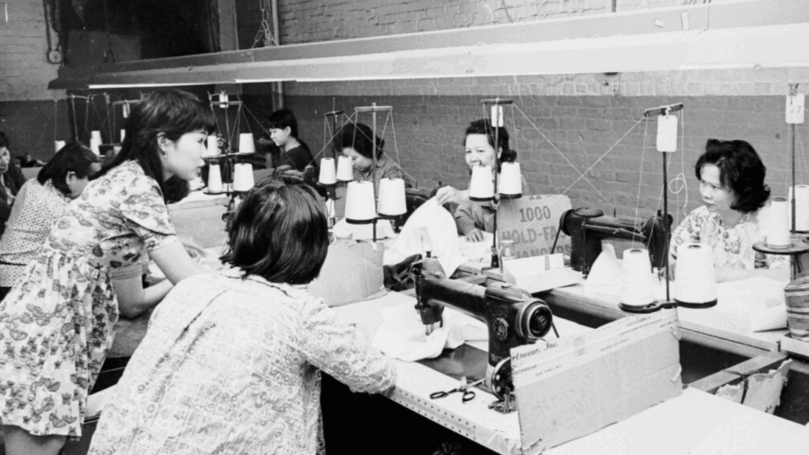
Eventually, Luo shows, proponents of Chinese migration argued that Chinese workers were a source of “cheap labor.” It should be noted that the concept of “cheap labor,” especially when applied to whole groups like racialized minorities, is socially constructed. It is a choice employers make to improve their profit margins and accumulate capital. Railroad, land development, shipping, lumber, agriculture, and garment-making companies that hired tens of thousands of Chinese workers in the post–Civil War era did so because they expected to pay Chinese workers a fraction of the wages paid to white workers. Ironically, and to their own detriment, many white workers used racist claims about their supposed superiority to support racist wage discrimination, a policy that caused them to lose access to those jobs. Instead of fighting for an equal, non-racist wage system, they often fell under the influence of anti-working-class small-business misleaders like Denis Kearney, who founded a falsely named Workingmen’s Party of California (not to be confused with the Marxist-oriented Workingmen’s Party of the U.S., which had rejected his membership application based on his anti-working-class stances). That party whipped up racist, anti-Chinese aggression and violence, presenting Chinese people as the source of their anxieties and fears. Born in Ireland, Kearney had been naturalized as a U.S. citizen just a couple of years prior to his infamous role. Revealing the ironies, contradictions, and distortions of white supremacist ideology, Kearney denounced the Chinese as a threat to “Anglo-Saxon” racial purity and as the cause of working-class poverty and unemployment.
While Luo does not directly emphasize or analyze the implications of the wage issue, his accumulation of archival evidence shows that capitalists, most politicians, and anti-Chinese activists across classes — who pretended to care about “the working class,” a concept they saw as exclusively white — shared the belief that racial stratification of jobs and wages was a normal and legitimate scheme. Even Chinese capitalists who received lucrative contracts to supply major corporations with Chinese workers accepted the racist wage differential. Advocates of anti-racist civil rights measures, such as Republican George Frisbie Hoar, a staunch abolitionist and one of a shrinking number of outspoken opponents of Chinese exclusion in Congress, also accepted this idea.
Resistance, strikes, and the duality of stereotypes
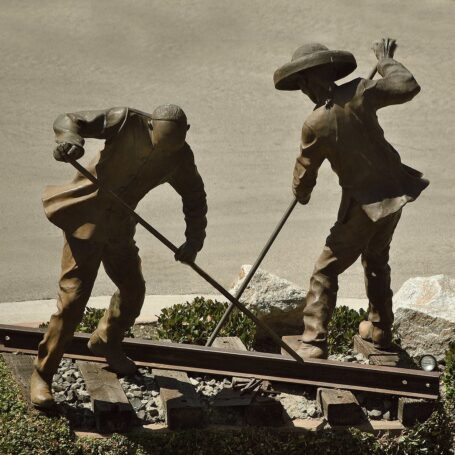
Among the relevant constituencies, it appears that Chinese workers themselves opposed the racist wage scheme. In 1867, more than 3,000 Chinese railroad workers struck during the construction of the Central Pacific. Their main demands were the elimination of the racist wage scheme and a shorter workday to match those of their white counterparts. Facing starvation, threatened with violence from the company’s easy access to nearby military forces, and with few allies among white workers, they returned to work shortly afterward with few concessions. Luo’s documentation of this episode aligns with most historical accounts, relying solely on business records that present management’s side of the story. Luo’s narrative reveals a central problem with how the story is often told. The strike is often presented as spontaneous, a framing that avoids questions about the massive organizing effort by working-class leaders in that community that was required to mobilize several thousand workers to act unanimously under conditions of great jeopardy. Imagine the strategic conversations held in secret to debate the need for outside support, or optimistic arguments about how swiftly the company would give in to their demands, given the nearly irreplaceable, high-level skills their jobs required. None of this reality is accounted for in the available archival record.
The racist dual-wage system was sustained by a double-edged racist ideology. Capitalists, who profited from lower wages, typically claimed Chinese workers were industrious, efficient, intelligent, and patient. Anti-Chinese ideologues saw them as a threat, as carriers of disease, and as so unlike Euro-Americans that they would never assimilate. The former ideological stream gave rise to the so-called model minority myth, which emphasizes a stereotypically supposed Asian soft-spokenness rooted in the false desire to see Asian people as submissive to capitalist authority. The latter seeks to cast Asian people, especially Chinese people, as perpetual outsiders. Each of these contending and contradictory theories, deployed in patterns and cycles, distorts reality. Each says more about the Euro-Americans who invented them than they do about Chinese people. The pathological desire to solve problems by subjugating an entire community through collective punishment — which, as the historical record shows, never solved the problems of Euro-American workers — exposes the weakness of white supremacist or, nowadays, white (or Christian) nationalist aggression. If “white” people created the most advanced and best political and economic systems humanity has ever known, why do they have to systematically resort to authoritarian forms of rule and fascistic abuses to defend them?
 Here, the historical record reveals another contradiction that Luo does not directly address. When Euro-Americans in other parts of the country during this period confronted capitalists and their allies in a struggle for power, they, too, were violently repressed. U.S. labor history is replete with this violence. In other contexts, capitalists also deployed racist theories of ethnic, national, and religious differences among European-descended people to accomplish similar goals. In fact, as today, capitalists generally controlled political leaders at most levels of government, the laws and policies they wrote, and media outlets they owned or dominated. They also exerted direct influence over social institutions such as religious organizations and schools, and controlled access to markets and consumer goods. Anti-Chinese aggression seemed to solve this problem by allowing working-class Euro-Americans to compete for some power through a distorted, racist, anti-working-class channel. Indeed, differences among Euro-Americans seemed to vanish when they arrived on the West Coast, which is why the Irishman Denis Kearney could pretend to defend “Anglo-Saxon” racial purity.
From lynch mobs to law: the institutionalization of exclusion
Anti-Chinese rhetoric quickly escalated into mass violence on a scale difficult to imagine today. From sporadic threats and killings by Euro-American miners who feared competition from Chinese neighbors, to routine harassment by “mischievous” children against Chinese people, to generalized racial profiling by law enforcement and racially motivated laws designed to make life difficult for Chinese people in most of the communities where they lived, violence escalated rapidly. Mass killings of Chinese residents in Rock Springs, Wyoming, ignited a fire of violence that swept across as many as 168 towns and cities in the West. Rock Springs was a coal-mining town where hundreds of Chinese miners were employed by Union Pacific Railroad–owned mines for a decade following an unsuccessful unionizing effort by Euro-American miners. Half-hearted attempts to build relationships with Chinese workers swiftly turned into aggressive hostility and claims that they had taken “white” jobs. In the fall of 1885, that aggression turned into shootings, assaults, arson, and kidnappings, including the burning of Chinese families to death in the basements of their homes. Subsequently, anti-Chinese politicians and movements in towns like Eureka, California; Tacoma, Seattle, and Newcastle, Washington; and dozens of other communities used the threat of similar violence to force thousands of Chinese people to leave their homes and property. Luo’s careful documentation of many of these events, though emotionally difficult to read, is a vital contribution to the historical record. Tacoma secured its place in history by deploying a racist expulsion method that would later become a model for the Nazis to implement their “final solution” during World War II. The happy irony is that today Tacoma is fast approaching majority-minority status.
Rabid violence led to the imposition of the first race-based immigration restrictions and to the massive enforcement bureaucracy that today is financially (and morally) bankrupting this country. Again, falsifications of the historical record are evident today. A review of the Department of State’s Office of the Historian website reveals the following false claim: “Although Republicans [at the time the Chinese Exclusion Act was passed] were largely sympathetic to western [California] concerns, they were committed to a platform of free immigration.” Luo’s careful study of the political debates over the Chinese Exclusion Act, immigration enforcement regulations and activities, and politicians’ pronouncements about Chinese people shows that anti-Chinese racism was a bipartisan affair. Especially starting in 1880, when the old “Radical” leadership of the Republican Party had retired or died off, the “free immigration” platform in that party’s program was replaced with racist slogans that defined Chinese people racially as “coolies” who threatened to create a new system of slavery. Republican as well as Democratic members of Congress wrote and voted for racist laws; Republican and Democratic presidents competed over who could most abuse the Chinese people, who never constituted more than 0.2% of the entire U.S. population in the nineteenth century.
Luo documents Chinese resistance to racist immigration policies. He shows how people like Yung Wing, a migrant from Macau who matriculated at Yale and became head of the Chinese diplomatic corps in Washington, leveraged his knowledge of English and American cultural norms to obtain naturalized citizenship. In addition, Wong Chin Foo, a lecturer and newspaper editor who established the first Chinese American civil rights organization, the Chinese Equal Rights League, also acquired naturalized citizenship and advocated a similar approach for Chinese people to resist oppression. In the 1890s, both men saw their citizenship stripped when the State Department ruled that racist applications of the 1790 Naturalization Act were still in force. That law, one of the first immigration laws created by the United States, defined citizenship as a privilege reserved for white men. The racist restriction on naturalization for Chinese immigrants was not lifted until 1943, when the U.S. government came to regard China as an ally in the anti-fascist war.
The Cold War returns: surveillance and the “perpetual foreigner”
After the war, the U.S. government returned to systematic harassment. While most Chinese people in the U.S. had begun to follow Wong Chin Foo’s advice to seek citizenship and stake an overt claim to being Americans, Cold War logics reverted official policy to its old pattern of suspicion, painting Chinese immigrants and citizens as potential foreign agents. Thousands of Chinese immigrants were hauled into immigration offices and interrogated, ostensibly under an amnesty program designed to settle the record on so-called paper sons — immigrants who supposedly fabricated false documents to prove they had been born in the U.S. and thus were eligible to remain. Massive records of their family histories, organizational activities in Chinese communities, and ties to business and political organizations were compiled as part of a U.S. intelligence-gathering scheme. Often, the information gathered was used to leverage compliance with U.S. Cold War agendas, especially after the successful completion of the Chinese Revolution in 1949. This atmosphere of suspicion and government surveillance persists today, with the federal government hounding, and even criminalizing, Chinese scholars who maintain family or professional ties with China.
Further reading
Readers may wish to supplement their reading of Strangers in the Land with books such as Ronald Takaki’s A Different Mirror, Erika Lee’s At America’s Gates and America for Americans, Alexander Saxton’s The Indispensable Enemy, and Lisa Lowe’s Immigrant Acts. These books tend to situate Chinese American historical experiences within broader relations with other racialized groups and within more focused class- and labor-based analyses.
Michael Luo’s best-selling Strangers in the Land is an indispensable chronicle that unearths the long arc of anti-Chinese racism, tracing its evolution from the early welcome of Chinese labor to the violent purges, codified exclusions, and dueling stereotypes that cast Chinese people as both model minorities and perpetual outsiders. By documenting how the bipartisan machinery of exclusion, a racist dual-wage system, and systematic state surveillance shaped the lives of Chinese immigrants and their American-born children, Luo exposes the deep historical roots of present-day nativist assaults — from attacks on birthright citizenship to the suspicion that renders Chinese Americans as potential spies.
Luo’s work confronts the falsifications that sustain racist policy but also recovers the often-obscured resistance of Chinese workers and civil rights advocates, offering a vital, if emotionally harrowing, testament to the enduring struggle for belonging in a nation that has repeatedly rewritten the Chinese American story as one of strangerhood.
The opinions of the author do not necessarily reflect the positions of the CPUSA.
Images: Strangers in the Land by Michael Luo. Chicago Public Library; Chinese railroad workers. Wikimedia Commons; Chinese railworkers memorial. Loco Steve on Flickr. Creative Commons; Chinese-American women work at a sewing factory. Kheel Center on Flickr. Creative Commons.
Author

-
Joel Wendland-Liu teaches in higher education. He uses critical race theory and Marxism in his research and award-winning teaching. He is the author of The Collectivity of Life and numerous scholarly articles. He is a member of the AAUP and is deemed “dangerous” by Campus Watch, a right-wing, pro-white supremacy blog that is funded almost completely by right-wing billionaires and millionaires who control the Republican Party.
 Join Now