

Labor Day is often presented to us as a celebration without struggle.
A long weekend. A cookout. A sale at the store. One last summer holiday before the seasons change.
But Labor Day does not belong to the corporations selling discounted mattresses. It does not belong to politicians posing in union halls once a year. It does not belong to the bosses who spend eleven months fighting workers and then issue statements in September thanking us for everything we do.
Labor Day belongs to the working class.
And the working class has something to say.
Across this country, millions of people work harder and produce more than generations before them, yet struggle to afford the basic necessities of life. Workers build the houses and cannot afford the rent. We stock the grocery stores and can’t afford the meat. We educate the children, care for the sick, move the freight, manufacture the goods, clean the buildings, prepare the food, maintain the roads, and keep society functioning and then we are told that security, dignity, healthcare, retirement, and time with our families are things we must somehow earn all over again.
Meanwhile, extraordinary wealth accumulates in fewer and fewer hands.
There is nothing natural about this arrangement.
The billionaire does not create a billion dollars of value with their own hands. Workers create that value. The billionaire takes it.
That fundamental contradiction remains at the center of American life.
And workers are beginning, once again, to recognize it.
We have seen workers organize in industries once declared impossible to organize. We have seen young workers rediscover the union not as an artifact of the past but as a weapon for the future. We have seen strikes remind employers that not a wheel turns, not a package moves, not a classroom opens, and not a hospital functions without labor.
This revival should give us confidence.
But we must also recognize the scale of the task before us.
The labor movement cannot be satisfied with only negotiating the terms of our exploitation.
A labor movement worthy of the working class must fight for higher wages, shorter hours, universal healthcare, secure retirement, universal housing, strong public services, democratic workplaces, and the unrestricted right of every worker to organize and strike.
But our ambitions cannot end at the bargaining table.
We should ask a much larger question: Who should society be organized to serve?
For generations, working people have been told that there is no alternative to an economy organized around private profit. We are told that corporations must control investment, billionaires must accumulate fortunes larger than the economies of entire nations, and workers must compete against one another for whatever remains.
We reject that idea.
The mines belong morally to those who mine them.
The factories belong to those who operate them.
The hospitals belong to those who heal in them and the communities that depend upon them.
The schools belong to the people.
The wealth of society belongs to those whose labor creates it.
This is why the struggle of labor cannot ultimately be separated from the struggle for socialism.
We do not seek revolution because we romanticize upheaval. We seek revolutionary change because capitalism itself continually demonstrates the limits of reform. Every victory workers win is placed under pressure so long as economic power remains concentrated in private hands. Wages can be raised and then consumed by rent. Benefits can be negotiated and then attacked. Unions can organize and then face corporations willing to spend millions destroying them.
The working class therefore needs more than better conditions within the existing order.
The working class needs power.
Political power.
Economic power.
Social power.
Power sufficient not merely to influence the decisions of society, but to make them.
That is what revolution means in our time: the transfer of power from a tiny owning class to the immense majority whose labor makes civilization possible.
But we cannot speak seriously about working-class power in America without speaking about race.
From slavery to sharecropping, from segregation to discrimination in employment and housing, Black labor has repeatedly been exploited while Black workers have simultaneously been denied the full benefits of the wealth their labor created.
And racism has never harmed Black workers alone.
Racism has always been one of the most effective weapons available to the ruling class.
When a boss convinces a white worker that the Black worker beside them is the problem, the boss has weakened both workers.
When workers can be separated by race, they can be paid differently, housed differently, disciplined differently, and ultimately organized against one another.
That is why the struggle against racism is not something separate from the class struggle.
It is part of the class struggle.
The labor movement must therefore be uncompromising in confronting racism wherever it appears — in the workplace, in our unions, in our communities, and in society.
There can be no genuine working-class unity while Black workers are expected to leave their particular experiences of oppression outside the union hall.
The answer to division is not pretending differences do not exist.
The answer is building solidarity strong enough to confront them together.
The same principle applies to immigrant workers.
Immigrant workers perform some of the hardest and most essential labor in this country. They build homes. Harvest food. Cook meals. Clean buildings. Care for children and the elderly. Work in warehouses, factories, hotels, hospitals, construction sites, and countless other workplaces.
And too often their immigration status is turned into a weapon against them.
A worker afraid of deportation is easier to intimidate.
A worker who believes they cannot safely report wage theft is easier to exploit.
A worker afraid to organize is easier to underpay.
That vulnerability is profitable.
This is why immigrant workers must never be treated as outsiders to the American labor movement.
They are the American labor movement.
The worker who crossed a border searching for a better life is not responsible for stagnant wages.
The corporation paying poverty wages is.
The immigrant worker is not responsible for disappearing pensions, unaffordable housing, or declining public services.
The people accumulating enormous wealth from working-class labor are.
Our response must therefore be simple:
An injury to one is an injury to all — regardless of where that worker was born.
A labor movement divided between immigrant and native-born workers will remain weak.
A labor movement capable of organizing both can become unstoppable.
And there can be no liberation of the working class without the liberation of women.
Women are workers.
They are nurses, teachers, factory workers, service workers, professionals, caregivers, organizers, tradespeople, and union leaders.
Yet women continue to carry a disproportionate burden of the labor necessary to reproduce society itself — the cooking, cleaning, caregiving, child-rearing, and emotional labor without which no economy could function.
Capitalism depends upon this labor while systematically undervaluing it.
Entire occupations associated with women have historically been treated as less valuable precisely because women perform them.
And millions of working women effectively work two shifts: one for wages and another when they return home.
For working-class women, questions of childcare, healthcare, reproductive freedom, paid family leave, protection from harassment and discrimination, equal opportunity, and economic independence are therefore not secondary concerns.
They are workers’ issues.
A movement that asks women to fight for the working class while ignoring the conditions confronting women workers will never unite the working class.
“Women do not need liberation after the revolution.”
“Black workers do not need equality after the revolution.”
“Immigrant workers do not need dignity after the revolution.”
Yet those struggles are part of building the movement capable of revolutionary transformation in the first place.
This is the lesson we must understand.
Class exploitation does not erase every other oppression.
Capitalism takes the divisions that already exist in society, reproduces them, and when profitable, deepens them.
It tells the white worker to fear the Black worker.
It tells the native-born worker to fear the immigrant.
It tells men that the liberation of women threatens them.
It tells one group of struggling people that another group of struggling people has taken what rightfully belonged to them.
And while workers fight among ourselves over the crumbs, those who own the bakery walk away with everything.
We reject this politics.
Our movement offers something greater.
Not a working class in which everyone becomes identical, but a working class capable of recognizing its differences while discovering its common power.
Black liberation strengthens the working class.
Immigrant rights strengthen the working class.
Women’s liberation strengthens the working class.
And working-class power creates the material foundation upon which genuine human liberation can be built.
Our struggles meet at the point of solidarity.
That is why the struggle of labor cannot be confined by race, nationality, gender, immigration status, religion, or any of the other divisions repeatedly used to turn worker against worker.
A worker born in Mexico is not the enemy of a worker born in Colorado.
A teacher is not the enemy of a construction worker.
A Black worker is not the enemy of a white worker.
A rural worker is not the enemy of an urban worker.
Our enemy is not the worker beside us.
Our enemy is a system that becomes richer when we become divided.
The answer is solidarity as more than a slogan, but as a discipline.
When one worker is attacked, we respond together.
When one union strikes, the labor movement rallies around it.
When immigrant workers are threatened, organized labor stands beside them.
When workers anywhere in the world struggle against exploitation, American workers recognize them not as competitors but as comrades in a common struggle.
Because capital already understands internationalism.
Money crosses borders.
Corporations cross borders.
Factories cross borders.
Exploitation crosses borders.
Working-class solidarity must cross borders too.
This Labor Day, we should honor those who came before us, the miners, railroad workers, farmworkers, teachers, dockworkers, factory workers, organizers, socialists, communists, anarchists, immigrants, and ordinary working people who fought battles that once seemed impossible to win.
But the greatest honor we can give them is not nostalgia.
It is continuation.
They organized.
So must we.
They struck.
So must we.
They confronted concentrations of wealth and power that claimed themselves invincible.
So must we.
And they understood something that working people must rediscover in every generation:
There are more of us than there are of them.
We produce the wealth.
We possess the skills.
We operate the machinery.
We move the goods.
We teach the children.
We care for the sick.
We build the cities.
We make society run.
Our power does not come from the generosity of politicians or the goodwill of employers.
Our power comes from one another.
So on this Labor Day, celebrate.
Celebrate every organizer who refused to be intimidated.
Celebrate every worker who signed a union card despite the boss telling them not to.
Celebrate every steward who defended a coworker.
Celebrate every picket line that held.
Celebrate every contract won through collective struggle.
But tomorrow, organize.
Organize the unorganized.
Build fighting unions.
Educate our coworkers.
Develop working-class leaders.
Strengthen international solidarity.
Build institutions capable of sustaining struggle.
And above all, build a working class conscious not only of what it suffers, but of what it can become.
The future does not belong to the billionaire.
It does not belong to the corporation.
It does not belong to the landlord, the financier, or the profiteer.
The future belongs to the people who work.
And when working people understand their collective power, organize it, and decide to exercise it, there is no force on earth capable of permanently standing in their way.
Workers built this world.
Workers can change it.
Workers can govern it.
This Labor Day, let us recommit ourselves not simply to a better deal for labor, but to the liberation of labor itself.
All power to the working class.
The opinions of the author do not necessarily reflect the positions of the CPUSA.
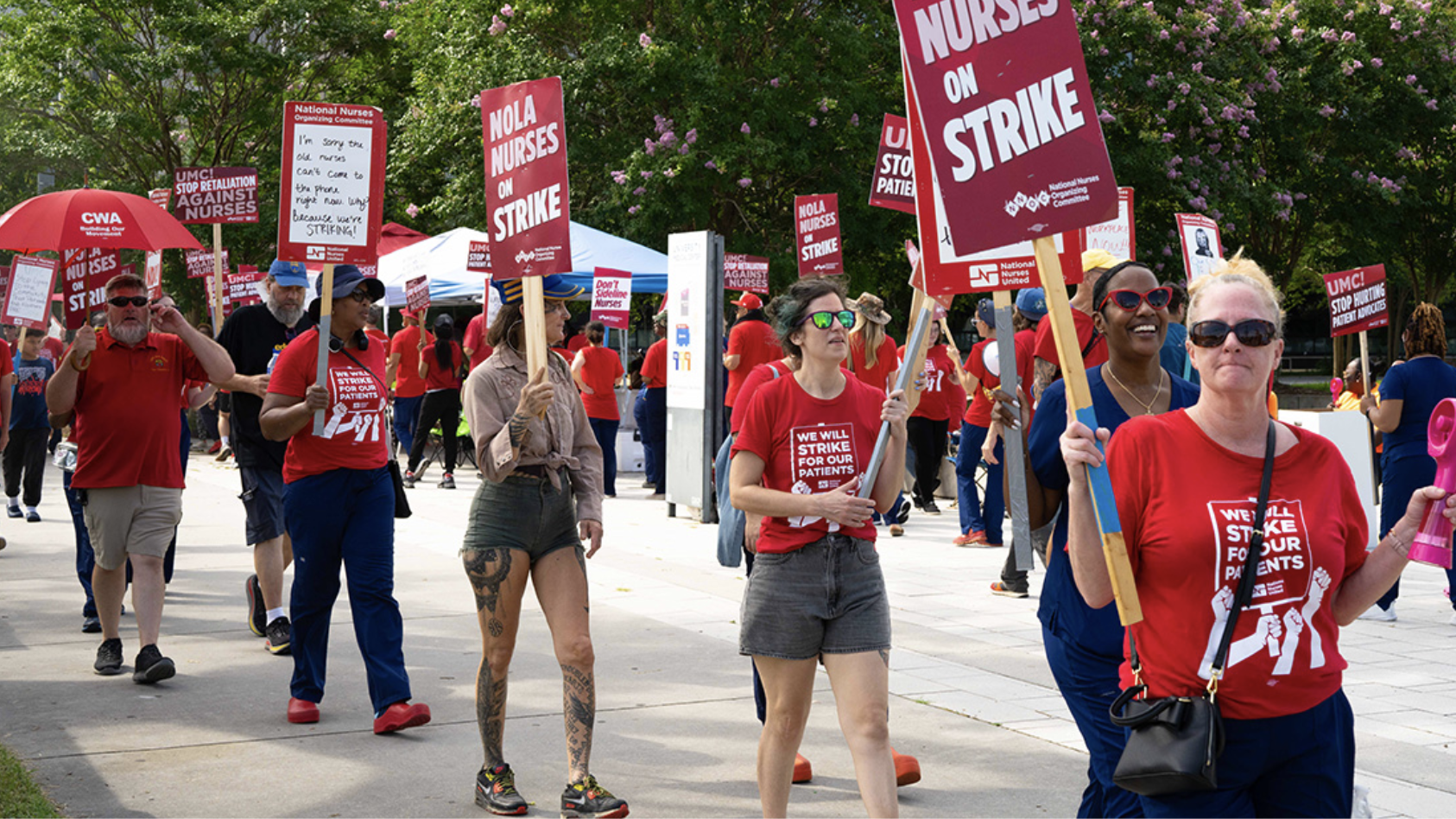
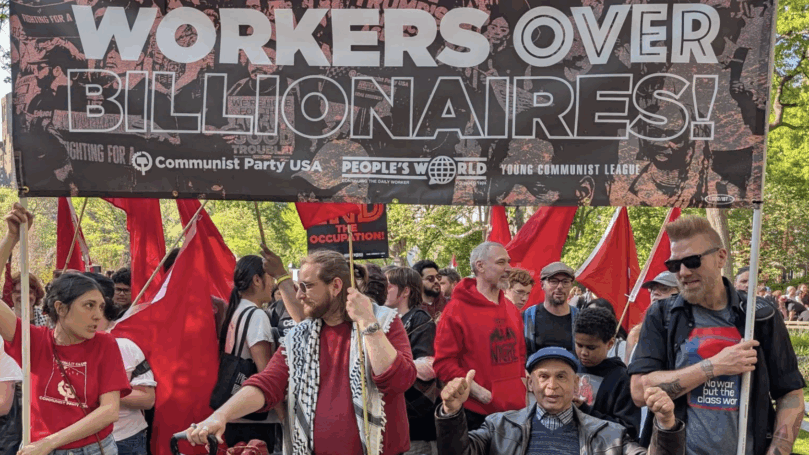
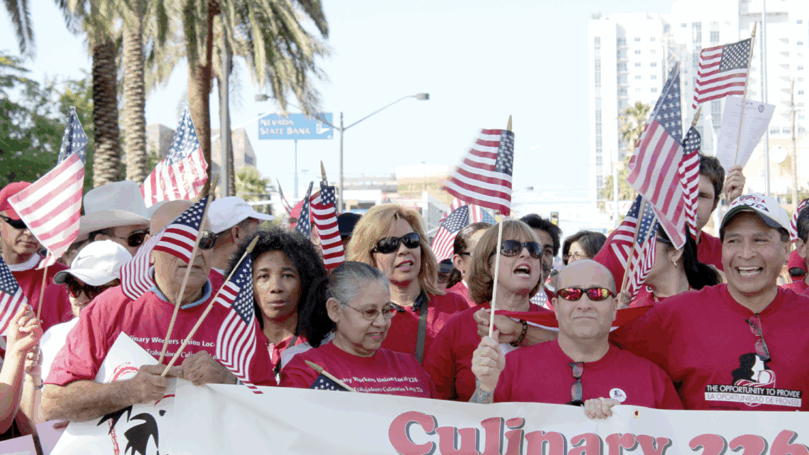
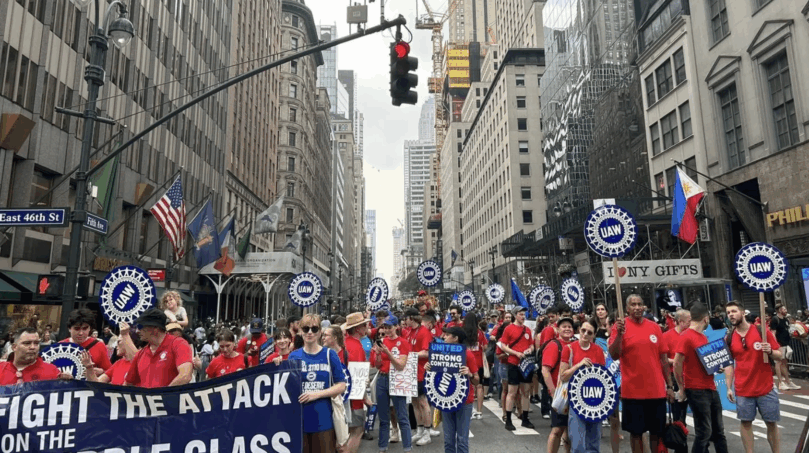
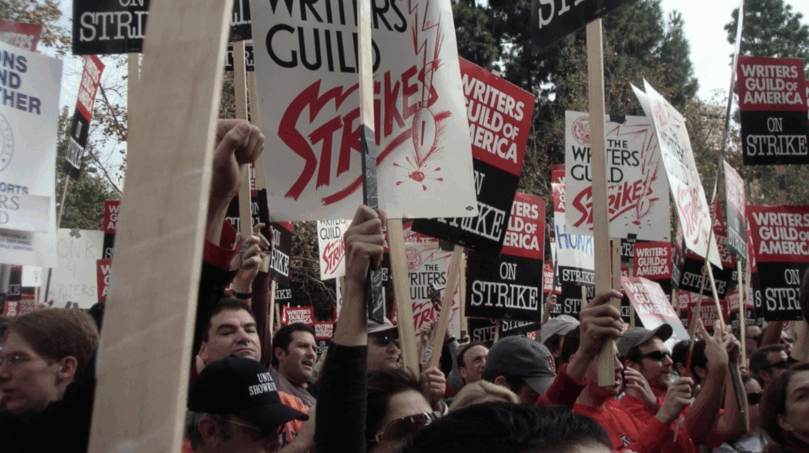
Images: National Nurses United rally in New Orleans. NNU; Workers Over Billionaires CPUSA contingent. CPUSA; Unite HERE Culinary Union, Las Vegas. Unite Here; UAW Region 9A Labor Day 2025 march in New York. UAW; Writers Guild of America on strike. WGA.

 Join Now