

Presented by Cameron Harrison on behalf of the Labor Commission CPUSA to the National Committee meeting on January 31, 2026.
Our labor movement is positioned within the context of a rising tide of worker militancy and growing class consciousness, which exists alongside a structurally weakened trade union movement with a legacy of class collaboration. This is coupled with a full-on political and economic assault by monopoly capital — the financial oligarchy. The Trump administration is accelerating this offensive on two fronts: it is an economic war on our working class through vicious union-busting and job destruction, and a political war of division through racism, civil rights rollbacks, terrorizing immigrant workers, and a turn toward fascist politics.
This moment demands a unified, militant response from our labor movement. Our task is to understand the new forces of unity emerging within this crisis, assess their strengths and weaknesses, and sharpen our strategy to build working-class leadership in the fight back. For us, that is everything.
As mentioned in the main report, the recent period has shown significant shifts, with sections of labor moving into broader political struggle. The “Hands Off” and “No Kings Day” mass protests marked a turning point, involving major unions like the UE, CWA, SEIU, AFT, and NNU in a conscious effort to build a broader front. This effort brought a working-class composition and concrete economic demands to the pro-democracy movement.
However, these mobilizations also exposed a critical weakness: the failure to mobilize union members in decisive numbers, highlighting a continued hesitation. Afterward, many workers rightly asked, “So we marched… What is to be done now?” This question underscores the urgent need to move from momentary protests and days of action to a sustained organizing strategy — building durable, class-based organizations in workplaces and neighborhoods into a coherent movement. It necessarily involves organizing the unorganized.
The labor movement’s overall response remains uneven. While some unions are mounting defenses — however fragmented — and embracing the broader political struggle, others are cautious, risk-averse, or narrowly focused on craft interests. This again reveals a major, unresolved challenge, as significant sections of the labor movement remain accommodated to managing their own decline rather than organizing to fight and reverse it.
Despite this, newer forms of labor-led organizing point a clear way forward. The “Bargaining for the Common Good” model, spearheaded by the Chicago Teachers Union, explicitly links contract fights to community demands such as housing, immigrant defense, climate justice, and racial equality. This approach correctly recognizes that labor’s power expands through deep coalitions — a principle also seen in the renewed union participation in May Day 2025 actions. The labor-community coalition, May Day Strong, continues organizing and mobilizing workers and their unions for May Day 2026, with mass organizing calls already scheduled and drawing in thousands of workers.
This renewed energy is driven by the growing, broad Left inside and around the labor movement — rank-and-file workers from civil rights, peace, environmental, women’s, immigrant rights, and youth struggles. This layer was the leading force pushing unions to take a stand for a ceasefire in Gaza and now advocates for an arms embargo on Israel. They are the catalyst building local unions into struggle-oriented organizations willing to directly challenge the oligarchy.
We see this growing political consciousness in labor’s stance on foreign policy and state violence. The labor movement’s condemnation of U.S. aggression against Venezuela — including the illegal intervention, kidnapping of the Maduros, and bombing — marks a significant development. Consider that during the height of the Gaza genocide, it took months of sustained pressure for the labor movement to say something. The quick responses from the AFL-CIO and other unions demonstrate a growing willingness to challenge, at least in rhetoric, ruling-class foreign policy and its wars for billionaire profits. While often framed as a defense of the Constitution, this opening creates space for a broader discussion on imperialism and reveals a growing peace-oriented pole within labor.
Similarly, the collective outrage against the ICE murders of Renee Nicole Good and Alex Pretti shows a growing willingness from our labor movement to confront state violence. Their responses, which tied ICE terror to the defense of all workers, advanced the guiding principle that “an injury to one is an injury to all.” While an explicit class analysis linking this terror to fascism remains primarily the work of the Left within labor, this development shows room for deeper political consciousness to grow.
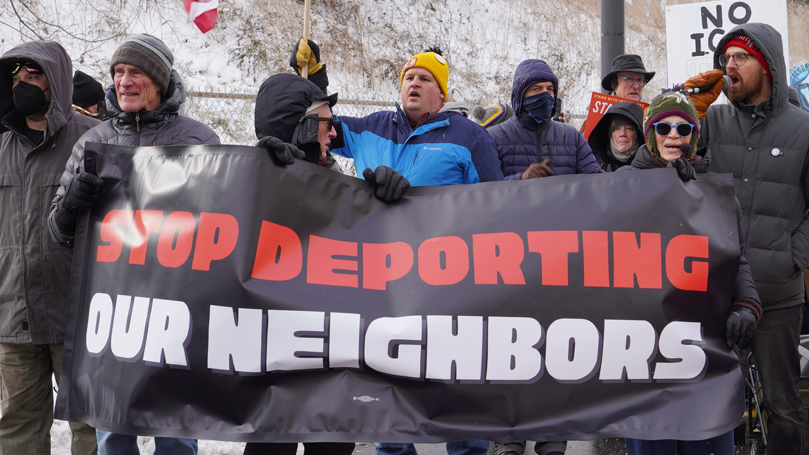
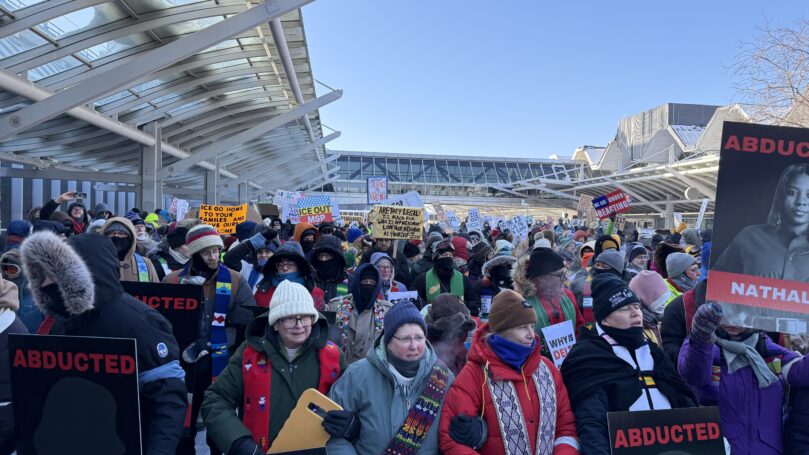
The fusion of labor and community struggle was seen in the statewide shutdown in Minnesota, now referred to as the “Minnesota General Strike.” Opposition to the federal Operation Metro Surge occupation sparked a statewide shutdown on January 23. A coalition of unions — including the state AFL-CIO, SEIU, AFT, ATU, CWA and UNITE HERE — alongside community groups, mobilized tens of thousands demanding the complete removal of ICE.
They framed the federal occupation as a direct attack on the working class and consciously merged traditional union action with the community’s fight against state violence. It illustrated the essential Labor-Black and Labor-Latino alliances in practice and proved the indispensable leading role of the working class. This was key for us — the trade union movement not only mobilized for it but provided the essential leadership, logistics, coordination, speakers, and marshals for the event to take place. When organized labor throws its weight behind something in such a formal and official capacity, new possibilities emerge and excitement among working people is generated.
The Coalition of Black Trade Unionists has taken a leading role by passing a resolution calling for a National Union Day of Solidarity — an initiative now gaining support in central labor councils and state federations across the country. Why does this CBTU resolution matter so much? Because today’s attacks make it clearer than ever that an attack on one is an attack on all. The stripping of collective bargaining rights from over 1.3 million federal workers is the largest single act of union-busting in U.S. history. From terrorizing immigrant workers with ICE raids to slashing jobs protections and launching cultural wars, the ruling class is seeking to divide and weaken our unity. This moment and the growing pro-democracy, anti-monopoly movement need organized labor to lead on mass actions.
Much like what happened in Minnesota, the CBTU call is for a labor-led demonstration, rooted in our biggest organized working-class force: the trade unions. It is being built from the ground up, pushed by rank-and-file union members through their locals and central labor councils. It has a stronger, broader base within the diverse membership of organized labor. The organizing to make it happen builds our strength for future fights and is a “structure test” for our ability to mobilize in decisive numbers. Furthermore, it is a call from Black workers who know that mass mobilizations are one of the key tools to win both civil rights and labor rights.
Comrades, these new developments exist within the deepening crisis of capitalism — a systemic failure marked by permanent decay, soaring productivity alongside stagnant wages, a turn to a parasitic war economy, and the resort to fascist politics to divide our class. Our labor movement’s long-term survival depends on correctly diagnosing the crisis we face and charting a common path forward. We must overcome the legacy of class collaboration, mount a unified and militant defense, and organize the unorganized millions on a massive scale. Supporting and building initiatives like the CBTU resolution for a National Union Day of Solidarity is a concrete step on that path.
But there are other way-stations coming up as well. On February 7, there will be a Young Worker March on Washington, endorsed by AFGE Youth, CBTU, APRI, LCLAA, and the AFL-CIO. On March 28, there will be another No Kings demonstration. And of course, May Day 2026 is proving to be a major event already, with thousands of workers joining May Day Strong calls.
Our Labor Commission proposes the following three areas for our National Committee to strongly consider.
First, we need to help develop and support aggressive, innovative organizing tactics that move beyond the crippled NLRB process to build power among millions of unorganized workers. This means we must fight to fundamentally transform current labor law and move our unions to adopt organizing the unorganized as a fundamental feature of their work.
Second, we must build independent working-class political power. This means running trade union candidates and party members for office on a transformative program that confronts the fascist threat and offers a compelling alternative. Such a program could champion initiatives like the Just Transition and Third Reconstruction. It must necessarily infuse the struggle for democratic rights, particularly voting rights and affirmative action, with a progressive economic agenda.
Third, this demands we fight for a massive investment in political education in our unions and the conscious strengthening of Left-Center unity at every level. We must foster the broad Left within the labor movement, which is a catalyst for direct action and class consciousness. At the same time, efforts to bring Center elements toward the Left pole are crucial to isolate the influence of the class collaborationists.
To conclude: we need to build a larger, more deeply rooted Communist Party, which is essential to this success. Our active presence in the workplaces and unions can help develop the necessary analysis, strategic unity, and unwavering commitment to steer this growing energy beyond defensive battles — where we fight forward toward a socialist future, where the people and the planet come before profits.
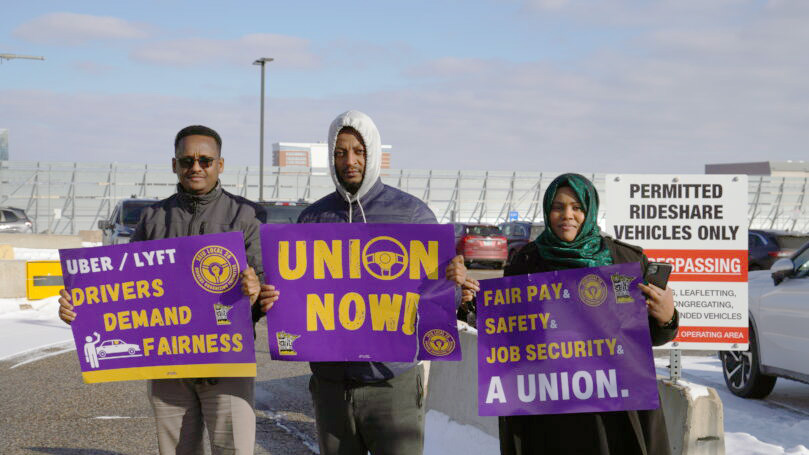
Images: Union members demonstrate against ICE in Minnesota. SEIU Local 26 on X; Faith and labor demonstrators occupy section of Minneapolis International Airport on Jan. 23. People’s World; Rideshare drivers demonstrate outside MSP. SEIU Local 26.

 Join Now