

Review of Richard Lenzi, Yankee Radical: Emily Pierson, Suffrage and Socialism (Albany: SUNY Press, 2026) 239pp.
On the 250th anniversary of the Declaration of Independence, which gave meaning to an anti-colonial revolution already in progress, it is important to remember those who dedicated their lives to the struggle for freedom, equality, democracy, peace, and socialism. Capitalists have hijacked this history for their own purposes while omitting socialism entirely. And they have either marginalized or completely omitted major figures in U.S. history.
Whether it was Tom Paine’s Common Sense, which played an important role in the Declaration of Independence, Thaddeus Stevens, the abolitionist and radical Republican whose leadership in Congress during and after the Civil War played a central role in the 13th and 14th Amendments, the first abolishing slavery and the second establishing national citizenship over the doctrine of states, or many others who fought the battles for labor’s rights, civil rights, and against imperialism and war, the numbers are great.
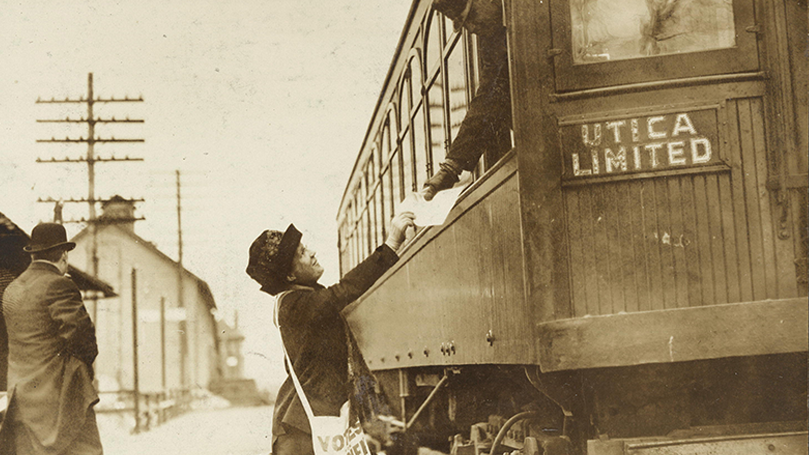
Emily Pierson, a renaissance woman whose life spanned careers in English teaching, medicine, and activism for the women’s suffrage movement, the socialist movement and after WWI the world Communist movement and the CPUSA, deserves to be remembered
Richard Lenzi, an independent scholar, has given her the recognition she deserves in Yankee Radical: Emily Pierson; Suffrage and Socialism. His brilliant biography of Pierson’s life deftly balances the personal and the political. Lenzi looks at a myriad of documents, from manuscript files, memoirs, and the legion of FBI and police records from agents and informers who continued to investigate her until her death in 1971.
About Emily Pierson
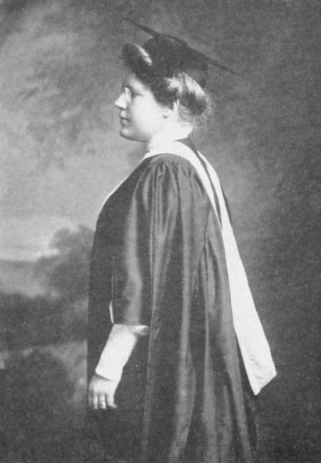
Emily Pierson was born in 1881 to a Connecticut family which gained great wealth by developing and applying industrial methods to agriculture. She struggled to get an education and graduated from Vassar College, one of only a handful of elite women’s colleges, and became an important speaker and activist for women’s suffrage in Connecticut. She also became interested in socialism and sought to find ways to connect the socialist movement, some of whose leaders saw suffrage as a “bourgeois distraction,” with those suffragists who saw socialism as another basis for a male-centered dictatorship.
For example, she actively supported Ella Reeve Bloor, a socialist woman who ran for state office in Connecticut before women had gained the right to vote. Later known as “Mother Bloor,” Ella Reeve Bloor became an important early figure in the Communist movement in the U.S. and remained a committed Communist for the rest of her life.
In 1920, with the ratification of the 19th Amendment, women would win the right to vote.
After a frustrating experience teaching English at DePauw University, a conservative Methodist college unsympathetic to both women’s rights and socialism, Emily would attend medical school at Yale, and return to her home in Cromwell, Conn., where she would become both county health officer and school nurse after the town’s doctor retired.
Still an activist, she sought to educate citizens about health questions. She held mass meetings and distributed pamphlets to educate citizens on public health questions. She also adopted a 10-month-old girl whom she would raise as her own daughter.
“Red Decade,” and Pierson’s political development
 “Red Decade,” Lenzi’s chapter on the depression and WWII, deals brilliantly with both Pierson’s political development and the achievements of the CPUSA, whose “organizing efforts showed it to be the most effective force in challenging the power of employers.” Pierson also saw the CPUSA as committed to ending all forms of racist oppression against Black Americans, bringing Black and white workers together and also reaching out to educated professionals like herself. Connecticut then had long been under the control of conservative Republicans who used ethnic divisions along with private detectives and police to suppress workers’ organizations. Communist directed organizing campaigns centered at the shop level advanced. Pierson found her family business, led by her arrogant self-indulgent nephews, a major center for union organization, which she supported.
Her relationship with Anna Louise Strong, which would last for the rest of her life, played a significant role. Strong, centered in Moscow, wrote about the achievement of the Soviet Union as it struggled to develop socialism and fight imperialism and fascism. She would visit the Soviet Union twice in the decade.
Upsurge and repression
As the national working-class upsurge advanced, so did the repression, which led Pierson to become more militant. When a group calling itself “The Russian Fascist Party,” reactionary anti-Soviet exiles, held a demonstration in Cromwell, she led a counterdemonstration with CPUSA activists. During World War II, she would play her largest role in mobilizing support for “Russian War Relief,” a second front, and those, including Trotskyists and other left sectarians, who equated Stalin with Hitler and the Soviet Union with Nazi Germany. At the same time, she continued her close connections with Connecticut CPUSA activists.
The Cold War had a devastating effect on CPUSA activists and their allies everywhere. Repression came from all sides. In the unions, including the local UE chapter, which was a Communist and left-led union, anti-Communists won leadership and expelled Communists. An open party meeting that Emily helped to bring about was the subject of a violent attack by the American Legion and right-wing vigilantes.
Emily continued to maintain her commitments and connections, actively supporting CPUSA national leaders who were arrested and imprisoned under the Smith Act in 1949. In 1956, Connecticut leaders were also convicted under the same Act but, as the Supreme Court began to defend basic civil liberties, the case was overturned. Emily, like many activists, most famously W.E.B. Du Bois and Paul Robeson, had her passport revoked, but subsequent decisions reversed this process.
The multi-faceted repression continued with the outbreak of the Korean War and the passage of legislation like the McCarran Internal Security Act and the McCarran-Walter Immigration Act, creating lists of organizations defined as “communist fronts” and making people afraid to either attend their meetings or sign their petitions. Leaders of these organizations who refused to turn over membership lists faced imprisonment. Naturalized citizens who participated in the CPUSA or any organization on the lists could be threatened with deportation.
Even with the sort of repression associated with a fascist police state, or Southern segregation where whites had civil rights and civil liberties and Black Americans did not, the CPUSA survived, although it lost a large majority of its members. Emily did not change her commitments, although she grew cynical about U.S. capitalism and imperialism and its success in seducing the American working class.
Her continued relationship with Anna Louise Strong played a significant role in reviving her activism in the last decade of her life. She would travel with Strong to China in the early 1960s and support the Cuban revolution, condemning the CIA-directed Bay of Pigs invasion.
She would continue to write and speak on a variety of issues until her death, separating herself from anarchist-oriented “New Left Radicals” and “Maoists” while continuing to support both the Chinese revolution and Mao Zedong’s leadership.
Emily’s work in her own community as a doctor, county health officer, developer of the sewage system, and opponent of land speculators enabled her to maintain public support in the face of the attacks by politicians, the press, the state police, and — most of all — the FBI over decades.
Lenzi merges the personal with the political
Lenzi has merged the personal with the political to understand Emily Pierson’s life, and merged her life with the history of the Communist Party of Connecticut and the CPUSA nationally, to understand the dialectical relationship between both. Marxists, Communists, all partisans of socialism, and all progressives have much to learn from it.
The opinions of the author do not necessarily reflect the positions of the CPUSA.
Images: Emily Pierson Handing out Leaflets in New York State Suffrage Campaign, ca. 1915 by F.E. Redmond/Library of Congress. Public domain. Portrait of Emily Pierson (1881–1971) from Souvenir Book of the Municipal Building Dedication, Hartford, Connecticut, 1915, page 64. Public domain.

 Join Now
.png)