

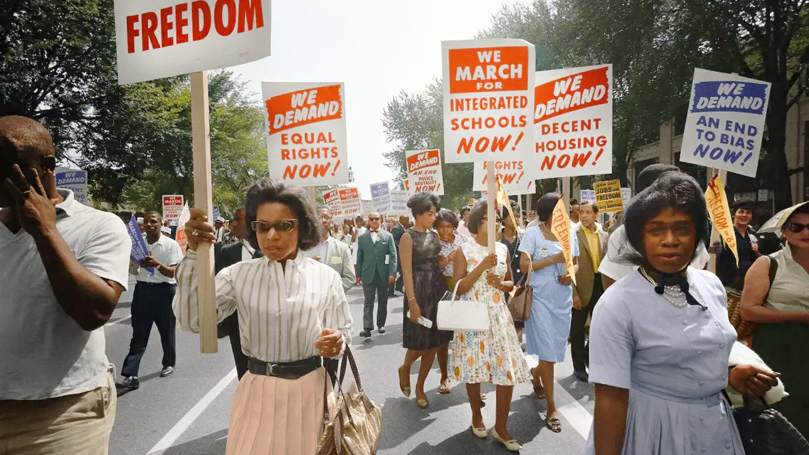
While Trump and MAGA work to erase the rich contributions of Black folks to the U.S. economy, arts, sciences, and culture, the people are resisting. While Trump attempts to become a petty fascistic racist dictator with no restraints on his power, the people are resisting. This Black History Month is a time to celebrate the centuries of resistance that Black people have sustained, with their working class allies, against racist violence and pervasive injustice. The people resist!
The capitalist class of this country has never willingly granted freedom, equality, or dignity to Black people, or indeed to any working people. Every victory advancing the needs or civic participation in this society of Black and working people has been wrung from the hands of the powerful through militant, collective, organized struggle, and every victory has been subjected to counterrevolutionary sabotage by the forces of capital and white supremacy. Today, with the KKK in the White House, the struggle is intense for democracy, working class power, and to protect Black people, working and oppressed communities and women from state violence.
The post-Civil War Reconstruction era saw much of the same white supremacist violence, and stands as a sharp lesson in struggle: paper rights, without the organized power of working people to enforce them, became hollow legal shells with no enforcement mechanism. Or they were reinterpreted in the capitalists’ favor by the courts.
Today, a sweeping, fascistic, counterrevolution is effectively gutting the wins of the second Reconstruction, the Civil Rights Movement, destroying enforcement capabilities or reinterpreting the laws. This is an assault on Black, Brown, and working class voting rights, and on labor organizations and legal protections with an initial focus on those federal unions with disproportionally high percentages of Black members and on those cities with Black elected leadership. Black history, and Black citizenship, are being erased and attacked.
Trump and MAGA are using attacks on Diversity, Equity, and Inclusion (DEI) as a curtain behind which they are implementing outright fascism, threatening every working person regardless of race, ethnicity, or gender. The country has seen this playbook before during the first Reconstruction. Black folks, working people, migrant, LGBTQ+ communities, and women and youth must unite to resist and to refuse to let the Trump/MAGA supporters move forward with implementing their Project 2025 fascist, inhumane, playbook.
The first Reconstruction, from 1865 to 1877, was nothing less than a revolution. Black men voted, held office, and shaped the laws of the states that had enslaved them. Black legislators drafted constitutions establishing public education, abolishing imprisonment for debt, and expanding democratic participation for poor whites as well. This was multiracial, working-class democracy, and it was seen as a threat by the planter aristocracy and Northern industrial capitalists alike. And the capitalist class did not sit idle. The Klan, extending the Slave Catchers that existed prior to the Civil War, waged organized terror, and when that was not enough, the Supreme Court stepped in.
In the Slaughter-House Cases, Cruikshank, and the Civil Rights Cases, the Court gutted the Fourteenth Amendment, which established that all persons born or naturalized in the United States are citizens, and prohibited states from depriving any person of life, liberty, or property without due process of law, or denying any person equal protection of the laws. The Court declared that the federal government would not protect Black freedom. This was a class decision. The Northern bourgeoisie had gotten what it needed and abandoned Black liberation. The Compromise of 1877 sealed the deal, and what followed was a counter-revolution — decades of Jim Crow, convict leasing, and lynch law. Rights without enforcement are decorations on a cage.
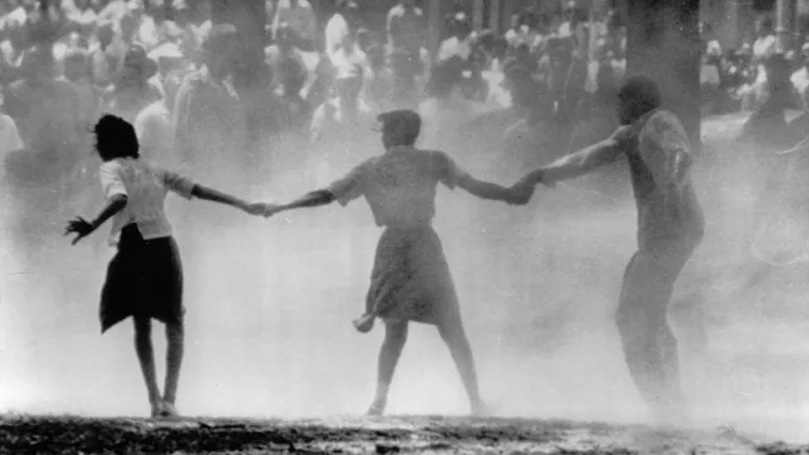
Now look around. Since Shelby County v. Holder gutted the Voting Rights Act in 2013, state after state has erected new barriers to Black political participation — voter ID laws, voter registration list purges, polling place closures, gerrymandering. These are the new literacy tests. But these attacks do not stop at the color line. Every restriction on the franchise lands on all working people — on Latino communities, on women, on young people, on Indigenous nations, on every worker whose voice the ruling class wants silenced.
The current Supreme Court has flung open the gates to fascism. By granting imperial powers to the presidency — near-total immunity from prosecution — and gutting voting rights, overturning affirmative action, facilitating the dismantling of the enforcement mechanisms in the state, this Court has laid the groundwork for fascist rule — a blueprint that Donald Trump and the MAGA movement have seized with both hands.
And as was argued in “Can labor stop the civil rights counter revolution,” Trump’s return to power on January 20, 2025, marked the beginning of a systematic dismantling of the civil rights and worker protections established during what the movement calls the “Second Reconstruction” — the political, legal, and legislative victories won between 1950 and 1970. Through the implementation of Project 2025, the MAGA right has imposed a legal counter-revolution, dismantling the entire civil rights enforcement infrastructure of the federal government with the collusion of the Republican controlled House and Senate, and of the fascist dominated Supreme Court.
The attack on Diversity, Equity, and Inclusion was the smokescreen behind which this broader assault unfolded. On his first day, Trump signed an executive order labeling DEI programs as “illegal and immoral discrimination,” framing the destruction of civil rights protections as “colorblind equality” and “meritocracy.” The next day, he repealed President Johnson’s 1965 Executive Order 11246, which had prohibited employment discrimination by federal contractors — protections progressively strengthened over decades to include sex, sexual orientation, and gender identity.
Since then, every federal DEI office has been shuttered. Federal websites were purged of content about African American and Latino contributions to history. The Defense Intelligence Agency canceled all events related to Martin Luther King Day, Black History Month, Juneteenth, and Holocaust Remembrance Day. Harriet Tubman was erased from official White House website pages. Military websites removed references to the Tuskegee Airmen and the Navajo Code Talkers. As journalist Nikole Hannah-Jones observed, this represented a “blitzkrieg” of erasure.
And the assault extended to material attacks on workers: a March 2025 executive order stripped collective bargaining rights from approximately one million federal workers — eighty-four percent of the unionized federal workforce, and disproportionately Black and Brown people — while some 317,000 federal employees were driven from government service through layoffs, firings, and forced buyouts. The Department of Education was shuttered. The Justice Department’s Civil Rights Division moved to dismiss voting rights cases. The civil rights laws remain on the books, but their enforcement has been gutted — just as the Reconstruction amendments were left as dead letters after 1877.
Today’s betrayal of the Second Reconstruction, the wins of the Civil Rights era, has caused the people to fight back on a scale not seen in generations. The 50501 movement — fifty protests in fifty states on one day, born from a Reddit thread — has expanded into successive days of action mobilizing millions. The Hands Off protests of April 2025 drew over one hundred thousand to Washington, backed by more than one hundred fifty organizations. The No Kings mobilization of October 18, 2025, saw over seven million people rise up at twenty-seven hundred events — the largest day of protest in United States history.
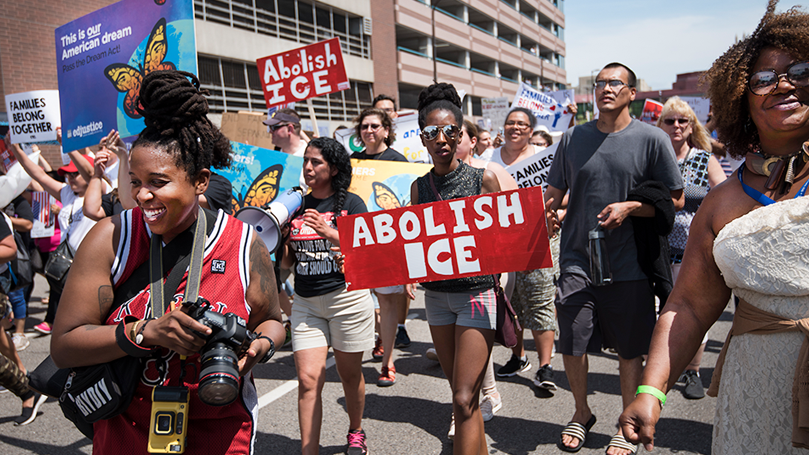
In Minnesota, a statewide shutdown saw unions and community organizations mobilize tens of thousands against the federal ICE occupation. The May Day Strong coalition is building toward May Day 2026, and a third No Kings action is set for March 28. High school students are marching against ICE. The Communist Party USA has helped to build and has participated in these events.
The Target boycott deserves particular attention, both for the scale of corporate betrayal it represents and for the breadth of the resistance it has provoked. In January 2025, just one day after Trump’s speech targeting DEI, Target Corporation announced it was hypocritically ending its Racial Equity Action and Change (REACH) program, terminating its $2 billion commitment to support Black-owned businesses, ceasing participation in the Human Rights Campaign’s Corporate Equality Index and other external diversity surveys, rebranding its “Supplier Diversity” program as “Supplier Engagement,” and abandoning its minority hiring goals. This was a company that, in the wake of George Floyd’s murder in its own hometown of Minneapolis, had pledged to increase Black employment by twenty percent, had funded HBCU scholarships, and had been honored by the Executive Leadership Council for its commitment to diversity.
Target’s abrupt reversal — announced just before Black History Month — amounted to a public capitulation to the MAGA assault on racial equity. The daughters of one of the company’s co-founders publicly called the decision “a betrayal” of the company’s founding values. Civil rights leaders, including Rev. Jamal Bryant, launched a forty-day boycott, and Rev. Al Sharpton warned of taking it national if the company did not reaffirm its commitments to the Black community. The boycott has been massive and effective: Target’s stock dropped sharply, its market value fell by over $12 billion, store foot traffic declined for consecutive weeks, and class-action lawsuits were filed by shareholders alleging the company had misled investors.
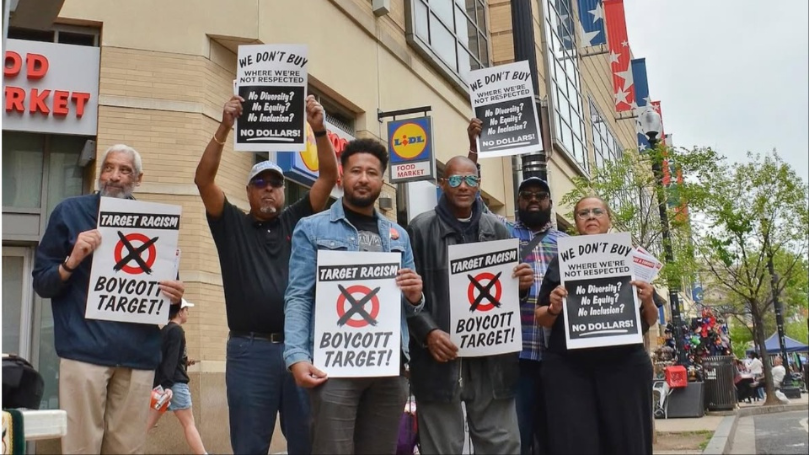
The Target situation also exposes the entanglement between corporate capitulation and state repression. In January 2026, federal immigration agents violently detained two Target employees — both U.S. citizens — at the Richfield, Minnesota, store, tackling them to the ground in full view of customers while one man shouted that he was a citizen with his passport in his pocket. ICE and Border Patrol agents have been staging operations in Target parking lots and patrolling store entrances across the Twin Cities, part of the broader federal occupation of Minnesota that has seen armed agents roam neighborhoods, tear-gas high school students, detain a five-year-old child, and kill two Minneapolis residents.
Target’s response has been one of corporate silence and evasion. The company donated $1 million to Trump’s inauguration fund, and its leadership has refused to publicly oppose ICE’s actions or bar agents from its properties without judicial warrants. Nearly three hundred Target employees signed a letter demanding urgent action, calling the company’s continued inaction “a moral failure.” Protesters have staged sit-ins at Target stores across the country, with dozens arrested at the Richfield location. The Target boycott thus stands at the intersection of the anti-DEI fight and the anti-ICE resistance, demonstrating how corporate collaboration with fascism — whether through gutting diversity programs or enabling immigration raids on workers — harms the entire working class. The boycott continues, massive and effective.
Yet the movement confronts a critical challenge. Reports from demonstrations across the country — from the Hands Off protests to the 50501 actions — consistently describe crowds that are overwhelmingly white and older, a stark contrast to the multiracial, Black-led protests that defined the 2020 uprising after George Floyd’s murder. In Chicago, Atlanta, and other cities with large Black populations, observers and participants alike have noted the relative absence of Black people from the marches.
This gap does not reflect apathy. Black activists point out that resistance takes many forms: boycotts, faith-based protests, mutual aid networks, community defense organizing, voter outreach, education, economic self-sufficiency initiatives, and local political engagement are all flourishing in Black communities. Some Black Americans, after turning out overwhelmingly for Kamala Harris only to see Trump return to power, have expressed exhaustion and frustration, a sense that their part was done and it is now others’ turn to carry the weight. Others cite well-founded fears of targeted state violence — fears that have been validated by ICE’s racial profiling and the killing of civilians in Minneapolis. Still others have noted that many of the protest events were initiated by predominantly white organizations, without deep roots in Black communities, and that the demands have not always centered the specific concerns of Black workers and families.
This reality makes organized labor’s active, visible involvement in the anti-MAGA struggle not just important but essential. The labor movement has the organizational infrastructure and the diversity of membership to bridge racial and community divides that spontaneous protest alone cannot. Unions represent one of the most racially integrated institutions in American life, and when labor enters the fight, it brings Black, Latino, immigrant, and white workers together around shared material interests — wages, benefits, job security, and dignity on the job. Union involvement can draw Black workers into the movement not through abstract appeals but through the concrete defense of their livelihoods — the same principle that brought hundreds of thousands to the March on Washington in 1963, which was, at its core, a march for jobs and freedom.
The Minnesota shutdown demonstrated what becomes possible when unions and community organizations act in concert: tens of thousands mobilized, workplaces closed, and roughly one in four Minnesota voters participated or had a loved one who did. That is the kind of power that can transform a protest movement into a force capable of stopping fascism. Without labor’s full participation, the movement risks remaining too narrow, too white, and too disconnected from the Black and Brown working-class communities that are bearing the brunt of the MAGA assault.
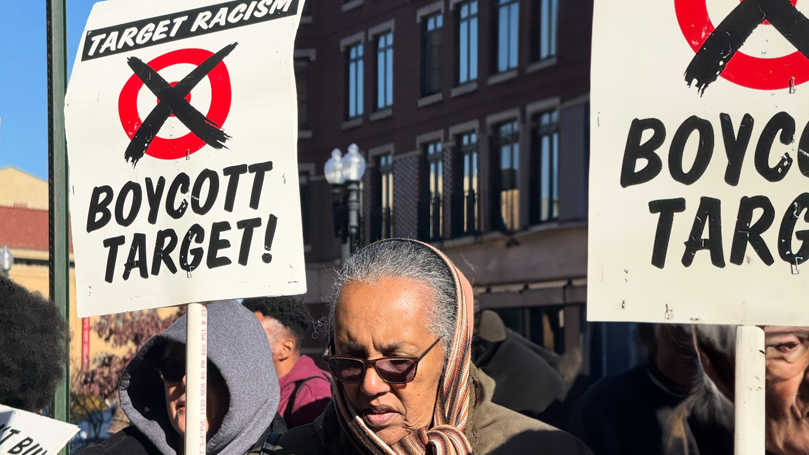
This movement has drawn in organizations across every line of race, nationality, and gender. The AFL-CIO says “Sadly, the attacks on diversity we are witnessing stand to not only halt that progress, but take us backward to a time when discrimination prevented so many of us from accessing opportunities afforded to others.” The NAACP declared the rollback of DEI a direct attack on Black economic progress. The Congressional Hispanic Caucus condemned it as an attempt to undo decades of progress. Lambda Legal vowed legal action against the pointed attacks on LGBTQ+ communities. Asian Americans Advancing Justice condemned the rescission of equity protections as a direct denial of their communities. The ACLU charged the administration with weaponizing civil rights laws to bully entities into abandoning equity. And critically, the Coalition of Black Trade Unionists has called on the AFL-CIO to organize a national day of union solidarity, insisting that DEI must be cemented into union contracts — because when the far right wages war on equity, workers need enforceable protections, not corporate promises.
As CBTU leader Lew Moye argued, there is a reason the civil rights movement and the labor movement came together in the 1960s: being divided does not serve working people. The Communist Party USA Program comments that the CPUSA fought for and implemented the slogan “Black and white, unite and fight!” as well as demands for full inclusion and equality for women in the labor movement. The party has always understood that the fight for Black liberation is inseparable from the fight against capitalism, and that the defense of democracy against fascism requires the unity of the entire working class. The same class forces that crushed Reconstruction are at work today.
The Communist Party is in this fight as an organizer and builder of the broadest possible coalition to defend and expand working-class democracy and collective power, and to demand peace with justice at home and abroad. The Program says “The Communist Party upholds both the immediate and long-range interests of the multiracial, multinational, multigender, and multigenerational working class and people of our country and builds unity of the entire working class with its allies.” The party fights for the full restoration of the Voting Rights Act, for Black history in every classroom, for the defense and strengthening of DEI protections in law and in union contracts, for an end to gerrymandering, for affordable jobs, housing, healthcare, for peace, and for socialism.
The Trump administration’s escalating assault on Cuba must be understood in this same context of counterrevolutionary aggression against Black liberation and international solidarity. On January 29, 2026, Trump signed an executive order declaring a national emergency with respect to Cuba and establishing a tariff system to punish any country that sells or provides oil to the island — a move aimed primarily at Mexico, which had served as Cuba’s oil lifeline after the U.S.-backed ouster of Venezuela’s government cut off that source. This came on top of a series of measures taken since January 2025: Trump immediately rescinded Biden’s removal of Cuba from the State Sponsors of Terrorism list, reimposed and tightened travel restrictions, restricted remittances that Cuban American families depend on to survive, and issued a National Security Presidential Memorandum in June 2025 designed to choke off every remaining economic lifeline to the island.
Cuba, already suffering under more than six decades of the U.S. blockade, now faces fuel shortages so severe that the country reportedly has only days of oil remaining. The administration’s stated goal is regime change — Trump has openly told Cuba to “make a deal” before it is “too late” — and the human cost falls entirely on the Cuban people, who endure food shortages, daily power blackouts, and a deepening economic crisis while their government provides free healthcare and education to its citizens and continues to send medical brigades to nations across the Global South.
The ferocity of Trump’s attack on Cuba is inseparable from Cuba’s historic role in the struggle for Black liberation — a role that the U.S. ruling class has never forgiven. From the earliest days of the Revolution, Cuba stood as a beacon of anti-racist internationalism. The revolutionary government immediately outlawed racial discrimination and committed itself to supporting anti-colonial liberation movements across Africa and the Americas.
In 1961, Robert F. Williams and his wife Mabel, leaders of armed self-defense in the civil rights struggle in Monroe, North Carolina, were granted refuge in Cuba after being driven out of the United States by racist persecution and government repression. Williams broadcast Radio Free Dixie from Havana, transmitting messages of Black resistance deep into the U.S. South. Cuba hosted the seminal Tricontinental Conference of 1966, forging bonds of solidarity among revolutionary movements across Africa, Asia, and Latin America. And in 1984, Assata Shakur — a Black Panther and political prisoner who escaped from a U.S. prison after a conviction widely regarded as unjust — was granted political asylum by Fidel Castro’s government, where she lived until her death in September 2025 at the age of seventy-eight.
Shakur’s words, “It is our duty to fight for our freedom; it is our duty to win,” became a rallying cry for the Black Lives Matter movement and for a new generation of activists. Hundreds of students from African American and Latin American communities in the United States have studied medicine in Cuba at the Latin American School of Medicine on full scholarships provided by the Cuban government — a concrete expression of solidarity that no U.S. administration has matched.
Cuba’s most consequential contribution to Black liberation, however, was its military intervention in southern Africa. In November 1975, in response to an invasion by apartheid South Africa — backed by the United States and the CIA — Cuba launched Operation Carlota, named after an enslaved African woman who led a revolt in Cuba in 1843.
Over the next fifteen years, more than four hundred thousand Cuban soldiers, doctors, teachers, and engineers served in Angola, defending the newly independent government of the People’s Movement for the Liberation of Angola against the apartheid military machine. Cuba trained fighters of the African National Congress’s armed wing, Umkhonto we Sizwe, at the Novo Katengue camp in Angola, providing the infrastructure and military expertise that sustained the South African liberation struggle in exile.
The struggle culminated in the Battle of Cuito Cuanavale in 1987–88, where combined Cuban and Angolan forces inflicted a decisive defeat on the South African military — the largest military confrontation in Africa since World War II. That defeat shattered the myth of white military invincibility, forced South Africa to withdraw from Angola and Namibia, and hastened the collapse of the apartheid regime. Nelson Mandela, upon visiting Cuba in 1991, declared: “Without the defeat of Cuito Cuanavale our organizations would not have been legalized.” More than two thousand Cubans gave their lives in this struggle — a sacrifice made by a small, blockaded island nation that understood, as the Cuban leadership put it, that the fight against apartheid was “the most beautiful cause.”
Trump’s campaign to strangle Cuba economically is therefore not merely an act of imperial bullying against a small Caribbean nation. It is an attack on one of the most powerful examples of international solidarity with Black liberation in modern history. The same U.S. ruling class that crushed Reconstruction, that maintained Jim Crow for nearly a century, that assassinated Black Panther leaders and imprisoned Black revolutionaries, has for over sixty years sought to destroy the Cuban Revolution precisely because Cuba dared to stand with the oppressed — in Africa, in Latin America, and in the United States itself.
The defense of Cuba against Trump’s escalating aggression is inseparable from the defense of Black history, Black liberation, and the right of all peoples to self-determination and sovereignty. The demand to end the blockade, to normalize relations with Cuba, and to respect Cuba’s sovereignty must be central to the anti-MAGA, pro-democracy movement. As Assata Shakur wrote, “We have nothing to lose but our chains.”
Today, reaction has a name: Trump, MAGA, fascism. The anti-MAGA struggle is at an inflection point, and the direction of that struggle depends on the level of unity that can be achieved — a pro-DEI, pro-democracy, labor-led united front of workers, oppressed peoples, and women that can fundamentally change the balance of forces is needed. Every working and oppressed person — Black, white, Latino, Asian, Indigenous, immigrant, native-born, of every gender — has reason to join this fight.
Together, the labor led working class can build the collective, organized, militant movement that implements the united power of working and oppressed people. The fascists are at the gates. Workers, oppressed peoples, and women are joining in united resistance. Together, they can stop MAGA and build a society in which regular working people, rather than just billionaires, can survive and thrive. Resist!
The opinions of the author do not necessarily reflect the positions of the CPUSA.
Images: March on Washington by Unseen Histories. Public domain. Birmingham students celebrate 1963 March on Washington. Facebook. Washington DC Target boycott by CPUSA. Creative Commons. Boycott Target by (Instagram). Abolish ICE by (X).
Author

-
Eric Brooks was born in Brooklyn, New York, and currently lives in Indiana. He is a life-long organizer in the struggle for working class power and socialism.
 Join Now