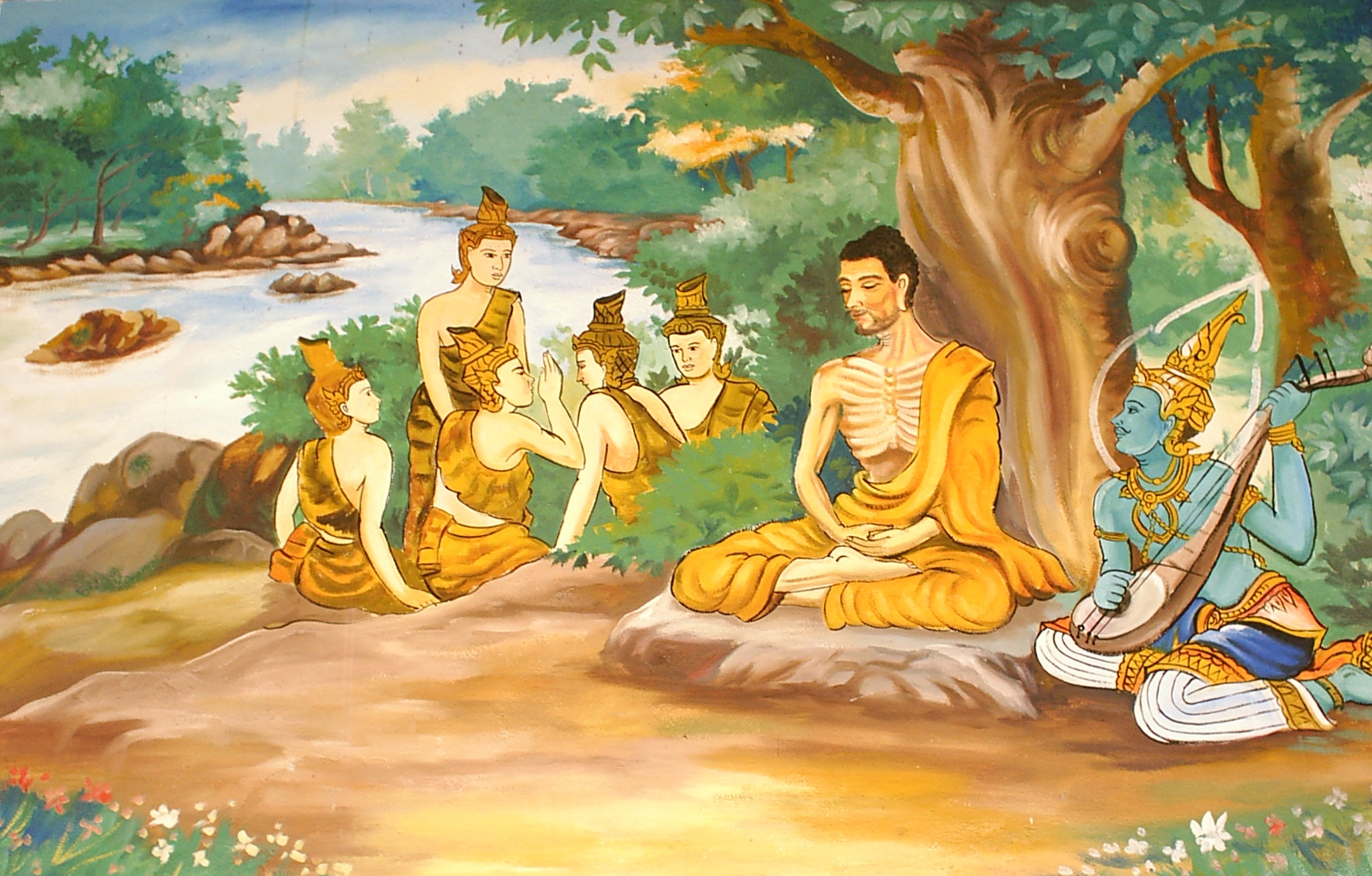
In November 2013, I was fully ordained a lay Buddhist priest in the Navayana tradition. After four years of seminary, rigorous study, and oral exams, I had arrived. But had I really? What I did not know at the time was that my life would eventually awaken to the philosophy of Marxist-Leninist thought and politics.
Buddhism arose in the fifth century B.C.E., before the capitalist system developed. Marxism developed in the mid-to-late 19th century, along with the rise of capitalism. Keeping that in mind helps clarify the different focuses of each and how they relate to each other.
The intersection of Buddhist religious practice and Marxist political thought presents a complicated combination of ethical, philosophical, and social commitments. At first glance, the two appear to belong to very different worlds. Buddhism is fundamentally concerned with transforming human consciousness, alleviating suffering, and cultivating wisdom and compassion. Marxism is seen as principally concerned with economic organization, class relations, property, labor, and transforming social institutions. One begins with the problem of suffering; the other begins with the problem of exploitation and class domination.
Yet the two traditions share important concerns. Both are deeply critical of excessive attachment to wealth and status. Both question social arrangements that produce unnecessary suffering. Both emphasize community and collective responsibility. Both challenge the assumption that competition, accumulation, and individual self-interest should be the organizing principles of human society.
For a person who functions as a lay Buddhist priest while also identifying with communist political philosophy, the relationship need not be understood simply as contradictory. It can instead be understood as a continuing dialogue between two approaches to human suffering: one emphasizing the transformation of the individual, the other emphasizing the transformation of social and economic structures.
The problem of suffering
The starting point for Buddhism is the recognition of dukkha, commonly translated as suffering, dissatisfaction, or unsatisfactoriness. The First Noble Truth recognizes suffering as a fundamental feature of conditioned existence. The Second Noble Truth identifies craving and attachment as important causes of suffering. The Buddhist path therefore seeks liberation through ethical conduct, mental cultivation, wisdom, and ultimately freedom from destructive attachment.
This framework has an obvious social dimension, even though Buddhism does not reduce suffering to economic circumstances. Poverty, oppression, violence, exploitation, and discrimination all produce or intensify suffering. A Buddhist commitment to compassion consequently creates an ethical obligation to respond to suffering wherever it is found.
The Buddhist response, however, is not simply to eliminate external causes. Buddhism also asks why human beings become attached to power, wealth, status, possession, and domination in the first place. The problem is simultaneously personal and social.
This distinction becomes particularly important when Buddhism encounters scientific socialism. A Buddhist might agree with a Marxist critique of economic exploitation while arguing that changing economic institutions alone cannot eliminate greed, hatred, ignorance, jealousy, or the desire for domination. Conversely, a Marxist might argue that individual spiritual transformation cannot by itself solve structural conditions that systematically produce poverty or exploitation. The intersection therefore begins with a shared concern about suffering but proceeds in different directions concerning its causes and solutions.
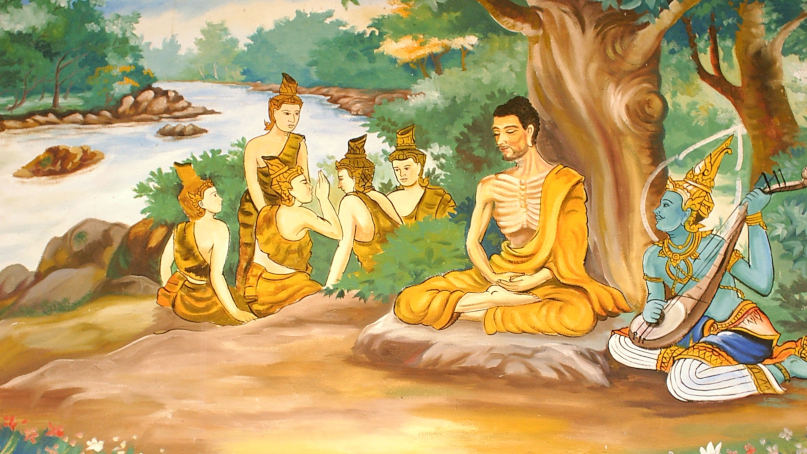
What is a lay Buddhist priest?
The phrase “lay Buddhist priest” requires some explanation. Buddhist traditions distinguish differently between monastics, ordained clergy, and lay practitioners. In some traditions, particularly certain Japanese lineages, individuals may receive priestly ordination while continuing to live outside a conventional monastic structure. For purposes of this discussion, a lay Buddhist priest can be understood as a person who combines ordinary participation in society with a recognized religious or ministerial role.
Such a person may have employment, family responsibilities, political commitments, and civic obligations while also serving a Buddhist community. This position creates an especially interesting relationship with Marxist thought because the priest does not stand outside society. Rather, the priest works within the same economic and political institutions as everyone else.
The Buddhist priest’s role can include teaching, counseling, meditation instruction, ritual, ethical guidance, community building, and service to people experiencing hardship. If that priest also holds communist beliefs, political philosophy can become one component of a broader ethical concern with economic justice. The central challenge is maintaining a distinction between religious ministry and political organization. A Buddhist priest who is also a communist may advocate for social justice while recognizing that Buddhist teaching cannot simply be reduced to a political program.
Marxism and socialism
This intersection is most clearly understood through Marxist analysis. Karl Marx examined society through the relationships among labor, property, production, and class. In capitalist societies, Marx argued, workers sell their labor power to owners of capital, creating relationships in which economic value and power are unequally distributed. Marx’s critique was not merely that some individuals possess too much money. His deeper argument concerned the structure of capitalist production and the social relationships associated with the private ownership of productive resources.
This perspective can intersect with Buddhist ethics in several ways. First, Buddhism traditionally places relatively little emphasis on material accumulation as a path to genuine fulfillment. The pursuit of ever-greater wealth can be understood as an expression of tanha, or craving. The problem is not necessarily possessing material goods, but becoming psychologically dependent upon accumulation, status, and consumption.
Second, Buddhist ethics emphasizes generosity, compassion, and non-harm. These values naturally encourage concern about working conditions, poverty, homelessness, hunger, and economic inequality.
Third, Buddhism’s doctrine of interdependence provides a philosophical framework for understanding the ways in which individual well-being depends upon broader social relationships. No person exists entirely independently of other people, institutions, communities, and the natural environment. These ideas do not establish Marxism as a Buddhist doctrine, but they create areas of philosophical conversation.
Buddhism’s critique of communism
The relationship is not entirely harmonious. Buddhism also raises serious questions about Marxist political theory and historical communist movements. One major difference concerns the Buddhist understanding of human nature. Marxist traditions often emphasize material and social conditions as major determinants of human behavior. Buddhism, by contrast, emphasizes mental states such as greed, hatred, and delusion. This is a central tension between Marxist and non-Marxist philosophical trends: idealism vs. dialectical materialism.
A Buddhist might therefore question the assumption that changing property relations will automatically produce a compassionate society. Suppose a society eliminates private ownership of major industries but leaves people motivated by greed, resentment, ambition, and desire for power. The economic structure may change without eliminating domination. Indeed, new hierarchies can emerge. From a Buddhist perspective, this is an important warning: the abolition of one form of hierarchy does not necessarily abolish the psychological tendency toward hierarchy. This tension is recognized in Marxism and encapsulated in the socialist period, which precedes communism. The socialist period continues the struggle toward developing a new society out of the morass of capitalist ideology.
The Buddhist concept of nonattachment can also create distance from political ideology itself. A person who becomes excessively attached to a political identity may reproduce the very patterns of ego, anger, and attachment that Buddhism seeks to overcome. For the Buddhist priest who identifies as communist, this creates a continuing ethical discipline: One must be willing to examine one’s own political commitments rather than treating them as unquestionable truths.
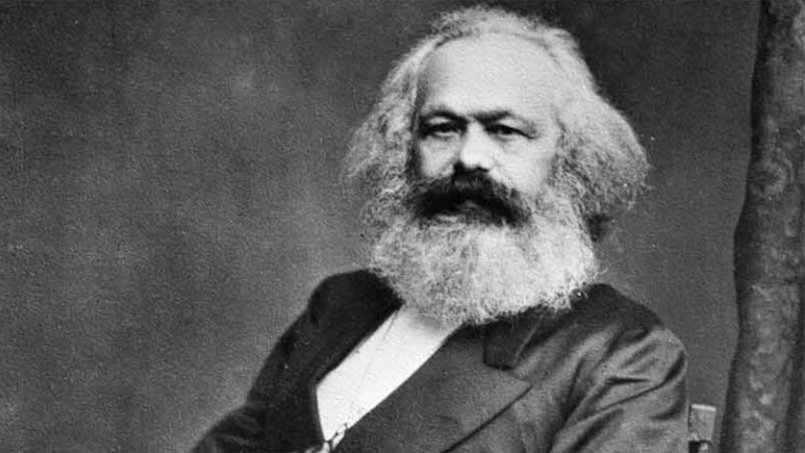
The Marxist critique of Buddhism
The criticism can also operate in the opposite direction. A Marxist may question whether Buddhist spirituality can become a form of retreat from material reality. If suffering is interpreted primarily as an internal psychological condition, there is a danger that poverty, exploitation, racism, colonialism, or oppressive labor conditions will be treated as problems of individual attitude rather than structural problems.
Marx famously criticized religion as a response to human suffering, arguing that religion could function both as an expression of suffering and as a means of coping with it. From this perspective, religious consolation can potentially reduce the pressure for social transformation. A Buddhist priest committed to social justice must therefore confront an important question: Is meditation being used to help people confront injustice, or is it being used to help people tolerate injustice?
There is no simple answer. Meditation can produce withdrawal, but it can also cultivate emotional discipline, compassion, and clarity that support social action. Buddhist communities have historically participated in social movements, peace activism, humanitarian work, labor struggles, and movements for racial and economic justice. The distinction may therefore lie less in whether Buddhism is “political” than in how Buddhist practice relates to social suffering.
Class struggle and nonviolence
One of the most interesting tensions involves the concept of class struggle. Marxist political theory has historically emphasized conflict between classes whose economic interests may be fundamentally opposed. Buddhist ethics, meanwhile, emphasizes compassion toward all sentient beings. This can create difficult questions for a Buddhist communist. If workers and owners have conflicting economic interests, how should a Buddhist understand the opposing class? Is the capitalist an enemy, or is the capitalist another human being caught within a system of craving, competition, and institutional incentives?
A Buddhist approach could distinguish between opposition to a social relationship and hatred toward individuals occupying positions within that relationship. This distinction has practical importance. A Buddhist labor activist can oppose exploitation vigorously without cultivating personal hatred toward the employer. A Buddhist organizer can engage in strikes, collective bargaining, demonstrations, or political advocacy while attempting to avoid dehumanizing opponents. Such an approach does not eliminate conflict, but it changes the ethical character of conflict: It becomes opposition without hatred.
Another major intersection concerns violence. Many Buddhist traditions place considerable emphasis on ahimsa, or non-harm. This creates significant tension with revolutionary traditions that have justified political violence under particular circumstances. A Buddhist communist therefore faces a serious ethical question concerning the means used to achieve social transformation and self-determination.
Can a just society be created through violent means? If violence produces hatred, fear, revenge, and new structures of domination, has the attempt to create liberation reproduced the conditions of suffering? Buddhist ethics tends to place significant emphasis on the relationship between means and ends. The method by which one pursues a goal is itself ethically significant. This does not necessarily mean that a Buddhist must reject all forms of political resistance, but it does suggest that political action should be evaluated not merely according to its intended outcome but also according to the suffering it creates and the mental states it cultivates.
The working priest and community
The identity of a lay Buddhist priest introduces another dimension: labor. Unlike a monastic who may live primarily within a religious institution, the lay priest may be an ordinary participant in the labor market. This creates an opportunity to interpret Buddhist priesthood itself through the concept of “Right Livelihood.” The Noble Eightfold Path includes Right Livelihood, meaning that one’s means of making a living should be consistent with ethical principles.
A Marxist interpretation might expand this question beyond individual occupation to include the organization of work itself. Are workers treated with dignity? Are wages sufficient? Are people given meaningful participation in decisions affecting their lives? How are resources appropriated and distributed? Are workplaces organized around cooperation or domination? Does the economic system encourage endless consumption? These questions allow Buddhist ethics and labor politics to interact without requiring Buddhism to become identical to communism.
Both traditions also have deep roots in communal organization. The Buddhist sangha is a community organized around shared practice and ethical commitments, while the Marxist tradition emphasizes collective action and solidarity among the working class and oppressed. The comparison is imperfect, but the common emphasis on community is significant. Modern capitalist societies often celebrate individual achievements, but Buddhism challenges the assumption that the isolated individual can achieve lasting fulfillment.
For the lay Buddhist priest who is also a communist, the community can become an important practical meeting point. A Buddhist community might provide food assistance, mutual aid, counseling, educational programs, labor education, or support for vulnerable people. In this context, religious practice becomes not merely private contemplation, but a form of community building.
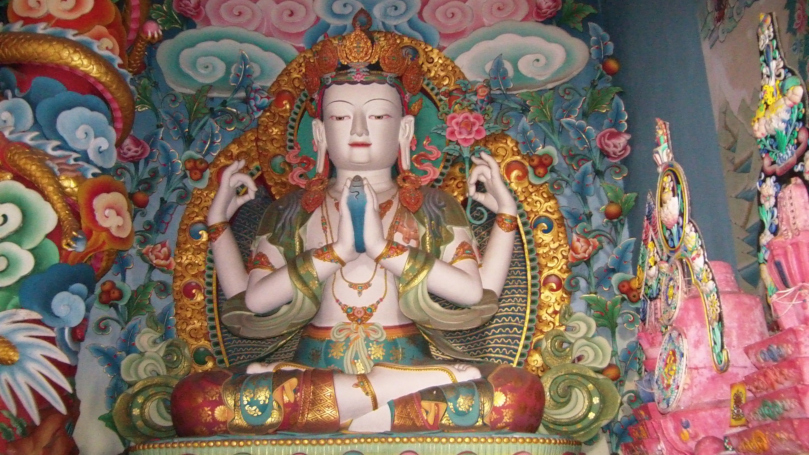
Attachment
Perhaps the deepest Buddhist challenge to communist identity is the Buddhist critique of attachment itself. Political identities can become powerful sources of belonging and meaning. That can be constructive, but it can also become an attachment. A Buddhist communist therefore faces an unusual spiritual test: Can one be committed without becoming consumed?
Buddhist nonattachment does not mean indifference. It means acting energetically while recognizing that one’s own perspective is limited and that political opponents remain human beings. This principle encourages intellectual humility. A Buddhist communist can advocate economic equality while remaining willing to recognize failures within communist institutions. Likewise, one can criticize capitalism without assuming that every alternative economic system will automatically produce compassion or justice. The Buddhist discipline of self-examination becomes particularly important here.
Social ethics and human liberation
The intersection of Buddhism and Marxism is most productive when neither tradition completely absorbs the other. Buddhism can challenge communist thought to take human psychology seriously. Economic institutions matter, but people also possess desires, fears, prejudices, attachments, and aspirations that can reproduce domination under different institutional arrangements. Marxist thought, meanwhile, can challenge Buddhism to take structural conditions seriously. Meditation and personal transformation are valuable, but individuals cannot meditate their way out of every social injustice. People require food, housing, healthcare, education, meaningful work, and political rights.
The synthesis might therefore be described as a form of Buddhist social ethics: an approach that combines concern for inner transformation with concern for social transformation. Its central question would not simply be, “How can I become less attached?” Nor would it be only, “How can society redistribute wealth?” It would ask both: How can human beings transform themselves, and how can they transform the conditions under which human beings live?
Being a lay Buddhist priest and a communist involves living within a productive tension between spiritual and political transformation. Buddhism emphasizes the transformation of consciousness; Marxism emphasizes the transformation of economic and social relationships. Neither perspective necessarily answers all of the questions raised by the other. For the lay Buddhist priest, this tension can become an ethical discipline rather than a contradiction that must be eliminated.
Political commitment provides a reason to confront structural suffering. Buddhist practice provides a discipline for examining the anger, attachment, ego, and desire for power that can accompany political struggle. The deepest challenge is to prevent either transformation from becoming detached from the other. Social transformation without paying attention to human consciousness can reproduce domination in new forms. Spiritual transformation without paying attention to social structures can leave preventable suffering untouched.
A lay Buddhist priest who is also a communist consequently occupies a distinctive ethical position. The task is not to prove that Buddhism and communism are identical — they are not. The most interesting task is to ask what each tradition can teach the other. Buddhism reminds political movements that liberation is not only an institutional question but also a question of consciousness, compassion, and human relationships. Marxist thought reminds Buddhist practitioners that compassion has social consequences and that suffering is sometimes produced by institutions as well as individual choices.
At their intersection lies a demanding but potentially fruitful principle: Human liberation requires attention both to the conditions in which people live and to the minds with which they encounter those conditions.
The opinions of the author do not necessarily reflect the positions of the CPUSA.
Images: Patrick Chapin (author). All rights reserved. Ascetic Buddha. Public domain. Karl Marx by CounterCurrents.org. Creative Commons. Buddhist statue. Public domain.
Author

Patrick N. Chapin is a retired litigator, trial attorney, and ordained Buddhist Priest in the Navayana tradition.
 Join Now